
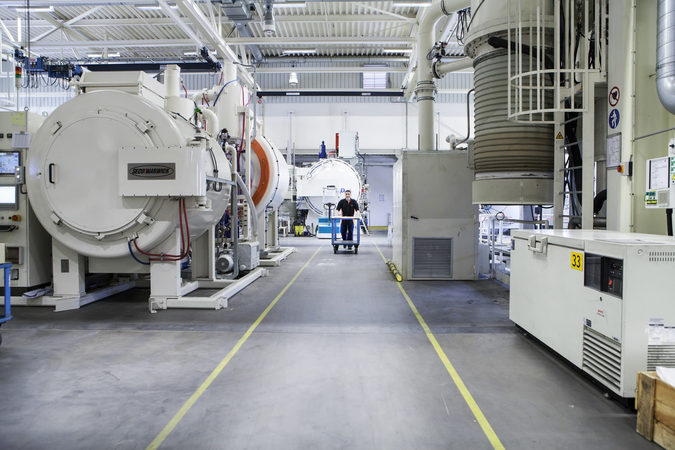
Stainless steel is celebrated for its excellent corrosion resistance, making it a popular choice in many industries. However, it is not without its challenges. Issues such as cold welding and galling can surface, especially in austenitic variants like grades 304 and 316. These problems typically occur when components experience repeated friction without adequate lubrication, a situation common in screw threads, couplings, or sliding parts. To address these vulnerabilities, stainless steel hardening processes play a crucial role. They not only prevent potential damage but also significantly enhance the material’s durability, ensuring that stainless steel maintains its optimal performance in demanding environments. This need for improved resilience makes exploring reliable solutions, such as those provided by stainihard, a wise decision for engineers and manufacturers striving for quality and longevity. Discover how to protect and strengthen stainless steel even further.
The process of stainless steel hardening
Stainless steel hardening involves techniques designed to increase the material’s surface hardness and wear resistance. One such process is stainihard NC, a thermochemical surface treatment. This treatment focuses on the diffusion of nitrogen into the stainless steel surface, which creates a hardened layer that is resistant to both galling and cold welding. Notably, the process works at low temperatures, typically between 350 and 500 degrees Celsius, preserving the metal’s corrosion resistance. It avoids changes in the steel’s color or dimensions, with the resulting hardened layer reaching depths of 10 to 30 micrometers and achieving surface hardness between 1200 and 1400 HV.
Benefits of stainless steel hardening
Stainless steel hardening, such as that provided by stainihard, offers several significant advantages for industrial applications:
- Increased resistance to wear, reducing maintenance needs.
- Enhanced protection against cold welding in high-friction areas.
- Maintained corrosion resistance of stainless steel surfaces.
- Preservation of the material’s original color and size.
- Seamless integration into existing manufacturing processes.
Unlike traditional hardening, stainihard NC offers a unique advantage because it does not introduce additional coatings that might delaminate over time, a common risk with alternative methods like hard chrome plating. Since the hardened zone is a diffusion process, it becomes part of the base material, ensuring long-term durability.
Applications and industries
Stainless steel hardening, particularly through the stainihard treatment, finds applications across a wide array of industries, including food processing, chemical manufacturing, offshore projects, and mechanical engineering. This process is suitable for various stainless steel components, such as valves, shafts, couplings, flanges, and fasteners. What distinguishes stainihard is its adaptability; the treatment can be precisely tailored to fit specific stainless steel alloys and meet individual wear and corrosion resistance requirements. This level of customization makes it an invaluable and versatile solution for industries that demand the highest standards of material performance and reliability in challenging environments.
Conclusion: choose stainihard for reliable stainless steel hardening
Stainless steel hardening is an essential process for ensuring that stainless steel components perform reliably under challenging conditions. Opting for the stainihard method allows industries to enjoy enhanced wear and corrosion resistance while preserving the metal’s natural properties. This treatment not only boosts material performance but also supports a sustainable approach to maintaining components’ long-term functionality. For businesses aiming to get the most out of their stainless steel applications, stainihard offers a robust and dependable solution. To explore how it can meet diverse industrial needs, visit www.stainihard.com today.